
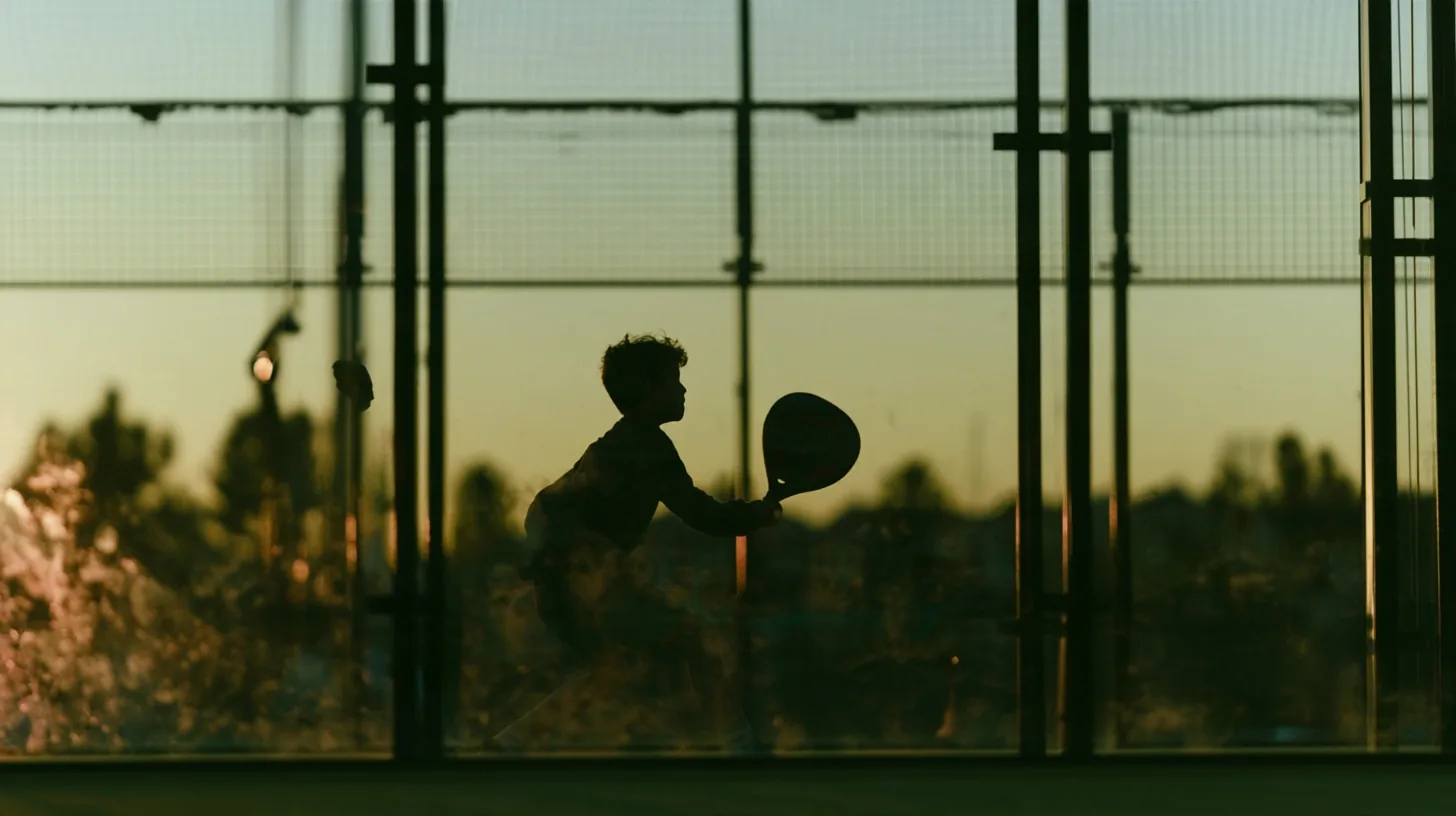
Padel can be an excellent first racket sport for children: short rackets, shared play and early success. It does not become child-friendly merely because a child stands on a standard court, however. Racket size, ball speed, group size and the purpose of each activity must fit.
This guide helps parents recognise a good trial session and avoid unnecessary purchases.
At what age is padel suitable?
There is no universal minimum. Many clubs begin around primary-school age; some offer playful groups earlier. More useful questions are:
- Can the child follow instructions in a group?
- Can they throw, catch and stop safely?
- Can they stay engaged for 45 to 60 minutes?
- Does the coach adapt space, speed and rules?
- Does the session look enjoyable?
Young children need many short games. Long technical speeches, queues and constant stationary hitting are warning signs.
Why children can enjoy early success
The serve is underarm, distances are shorter than on a tennis court and doubles keeps a partner involved. With adapted balls, children can create rallies early.
Padel still requires spatial awareness: ball, partner, opponents, net and glass all sit in the visual field. Good coaches introduce wall rebounds progressively and create clear safety zones.
Try coaching before buying equipment
Book a trial session with loan equipment first. You will then know:
- whether the child wants to continue
- which racket length the coach recommends
- which surface the venue uses
- whether regular groups exist
- whether siblings or parents can play at the same time
A premium racket adds little at the beginning. Suitable weight and enjoyment matter more than carbon layers or professional marketing.
Choosing a junior padel racket
A junior racket should:
- be light enough for controlled movement
- provide a large, forgiving sweet spot
- fit smaller hands
- avoid unnecessarily head-heavy balance
- have an intact wrist strap
The racket should not feel heavy after ten minutes. If the child’s elbow drops through the swing or the wrist cannot remain stable, the model may be too heavy or long.
The strap belongs around the wrist during play. It reduces the risk of a released racket travelling towards another person, and the 2026 FIP rules make its use compulsory.
Balls and shoes
Balls
Coaches may use slower or softer training balls with beginners. They create more time and cleaner contact. Official matches use the relevant competition rules; control comes first during learning.
Shoes
Junior shoes need lateral support and an outsole that suits the venue. Pure running shoes are designed mainly for forward movement and can feel unstable during quick lateral actions.
Look for:
- a secure fit without heel slip
- a clean, unworn outsole
- enough room for toes
- dry shoes for indoor sessions
Children grow quickly. Check fit regularly instead of buying shoes much too large in advance.
What good junior coaching looks like
Frequent ball contact
Small groups and stations reduce waiting. Children learn more through frequent, achievable actions than long explanations.
Adapted space
The full court is not required for every task. Shorter distances, marked targets and activities without the glass can simplify technique and awareness.
Both sides of the body
Throwing, catching, lateral movement and simple strokes should develop the whole body. Broad coordination is more valuable than early one-sided repetition.
Cooperation before results
Padel is doubles. Calling, moving together and scoring fairly belong beside forehands and volleys.
Safety on a glass court
Children must learn to judge distance from their partner and the glass. Clear rules help:
- Swing only inside the marked activity zone.
- Check the partner’s position before taking the racket back.
- Never leave loose balls in running paths.
- Do not sprint uncontrolled through court doors.
- Always use the wrist strap.
- Report pain, dizziness or feeling unwell immediately.
Coaches should stop tasks before fatigue makes movement uncontrolled. Medical questions or symptoms require qualified advice.
Junior tournaments: from club play to NextGen and GPS
Competition opportunities are growing for children who play regularly. MyPadel NextGen sometimes combines junior play with larger German Padel Tour events. At Frechen in 2026, juniors played a free Americano format and took part in talent observation. The German Tennis Federation publishes programme information.
The DPV’s German Padel Series lists U12, U14, U16 and U18 youth draws in its 2026/27 regulations. Players under 14 require parental consent.
Internationally, FIP Promises serves junior talent. That route becomes relevant only when coach and family plan a performance pathway together.
Parent checklist for a good club
- Are qualified coaches running junior groups?
- Are groups organised by age and playing level?
- Can equipment be borrowed first?
- Is group size manageable?
- Are safety rules clear?
- Does the club communicate costs and dates transparently?
- Is there room for enjoyment without early performance pressure?
Use padel near me to find venues and ask specifically about junior coaching.
Conclusion
A child does not need an expensive racket or tournament plan to begin. They need a good coach, suitable equipment, frequent ball contact and a group where learning is enjoyable.
Try first, then buy deliberately. If the child asks to return to court afterwards, the most important part already works.