
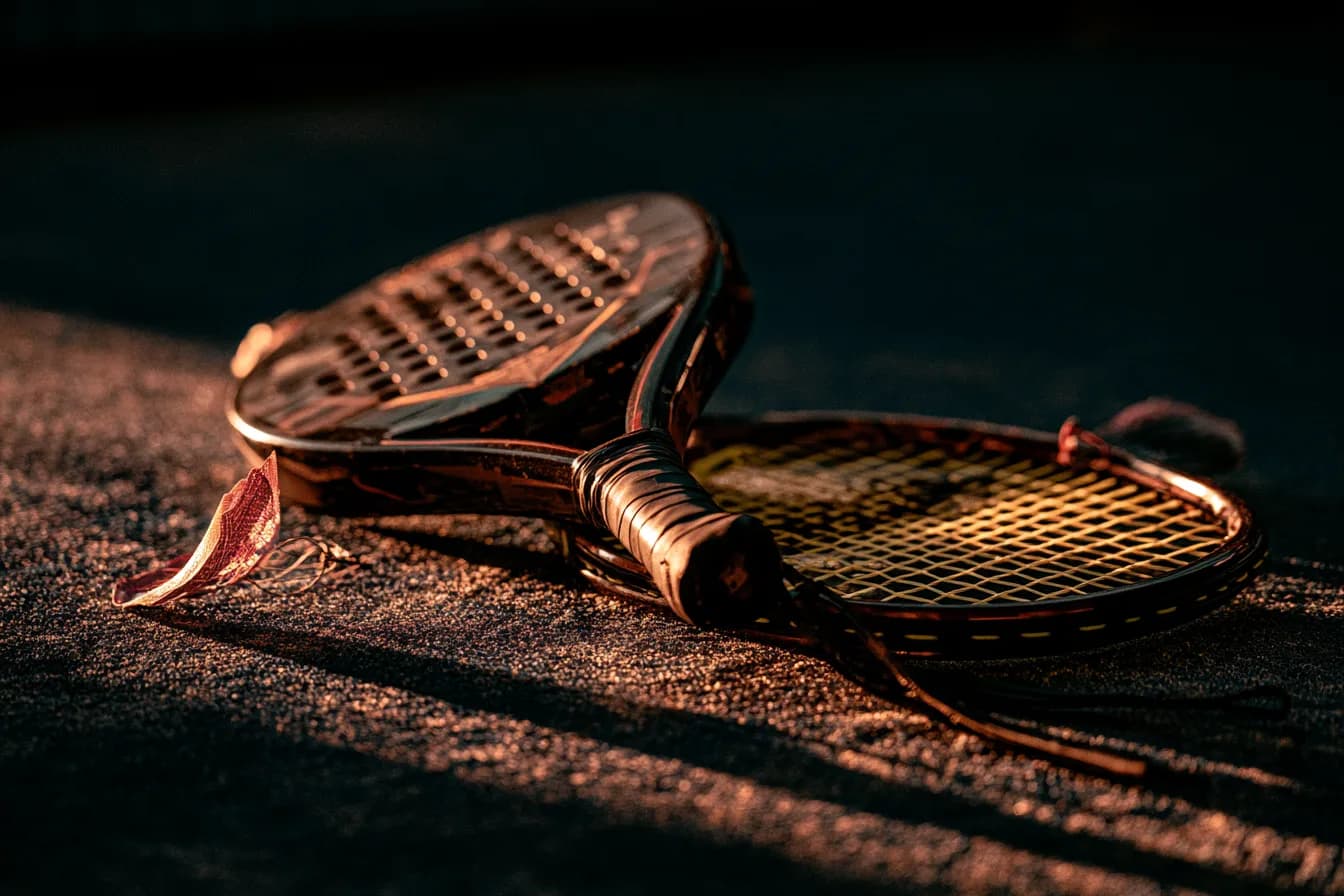
Padel is booming across Europe — and tennis players in particular are falling in love with the sport. No surprise: the basic concept is similar, but the differences make padel a unique experience. In this comparison, we break down both sports in detail so you know exactly what to expect.
The Court: Compact With Walls vs. Open Field
The most obvious difference is the court itself.
| Feature | Padel | Tennis |
|---|---|---|
| Length | 20 m | 23.77 m |
| Width | 10 m | 10.97 m (doubles) |
| Walls | Glass + metal mesh (3–4 m high) | None |
| Net height (centre) | 0.88 m | 0.914 m |
| Net height (sides) | max. 0.92 m | 1.07 m |
The padel court is smaller and enclosed by walls. This has a fundamental impact on the game: the walls are an active part of play. After hitting the ground, the ball can bounce off the glass wall or mesh and still be played — similar to squash. In tennis, the ball is out the moment it touches the boundary.
Each half is nearly square at 10 × 10 metres. This makes the court more manageable and reduces the running distances compared to tennis.
Singles or Doubles? Player Count
In tennis, you can play singles or doubles. Padel is always played as doubles — two against two. This has a big advantage: you always need four players, which massively strengthens the social aspect. Many padel venues offer matchmaking systems where you can sign up as a solo player and get paired with others.
Single padel courts (6 × 20 m) do exist but are extremely rare and play virtually no role in regular play.
The Serve: Underhand vs. Overhead
In tennis, the serve is one of the most important and technically demanding shots. The ball is tossed overhead and struck with full power. Pros reach speeds over 200 km/h.
In padel, it's completely different: the serve is played underhand. You drop the ball and hit it at or below hip height. This sounds unspectacular but has a huge advantage: even beginners get the ball in play immediately. Longer rallies develop from the very first session, which massively boosts the fun factor.
Like tennis, the serve goes diagonally and you get two attempts. If the ball touches the net and lands correctly in the service box, it's replayed as a let.
The Rackets: Strung vs. Perforated
| Feature | Padel racket | Tennis racket |
|---|---|---|
| Length | max. 45.5 cm | approx. 68 cm |
| Hitting surface | Solid with holes | Strung |
| Weight | 340–390 g | 260–340 g |
| Material | Carbon, EVA foam, fibreglass | Graphite, carbon |
| Price (entry) | approx. €50–100 | approx. €30–80 |
The padel racket is significantly shorter and has no strings — instead, it has a solid hitting surface with small holes. This completely changes the feel: padel rackets generate less spin and power than tennis rackets, but control is more direct. Beginners should choose round rackets with a large sweet spot for maximum forgiveness.
The Balls: Same Size, Different Pressure
Padel balls look like tennis balls at first glance — same size, same yellow colour. The key difference is internal pressure: padel balls have lower pressure, which makes them fly slower and bounce lower. This makes the game more controlled and gives you more reaction time.
In practice, this means regular tennis balls are not suitable for padel as they bounce too high and distort wall play.
Scoring: Almost Identical
Good news for tennis players: padel scoring is virtually identical.
- Point counting: 0, 15, 30, 40, game
- A set is won at 6 games (with at least a 2-game lead)
- A tiebreak is played at 6–6
- A match is best of 3 sets
The only difference in some tournament formats: padel uses the Golden Point at deuce (40–40). Instead of advantage, a single decisive point is played. This creates more tension and shorter match times — particularly popular in tournaments.
Difficulty: Padel Is Easier to Learn
This is one of padel's biggest advantages: getting started is significantly easier than tennis. Several reasons:
- Underhand serve: No months of practising the overhead serve
- Shorter racket: More control, less backswing needed
- Smaller court: Less running, quicker rallies
- Walls as helpers: Balls that would be unreachable in tennis can still be played off the wall
- Doubles format: Less court to cover per player
This doesn't mean padel is easy at a high level. Tactics, partner coordination and reading angles become extremely demanding as the level increases.
Cost Comparison
| Item | Padel | Tennis |
|---|---|---|
| Court hire/hour | €20–40 (for 4 players) | €10–25 (for 2–4 players) |
| Per person/hour | €5–10 | €5–12 |
| Racket (entry) | €50–100 | €30–80 |
| Balls (3-pack) | €5–8 | €4–7 |
| Shoes | €60–120 | €60–150 |
| Membership/month | Often pay-per-play | €30–80 |
Per person, padel is often cheaper than tennis since four players split the court hire. Many padel venues also operate without memberships — you simply book a court and play.
What Tennis Players Should Know When Switching
If you come from tennis, you have several advantages: you know the scoring, have good ball sense and understand the basic concept. However, there are a few things you need to unlearn:
1. Less Power, More Placement
In tennis, the harder shot often wins. In padel, precision beats power. A well-placed ball to the side wall is worth more than a hard shot that comes back easily.
2. Volley Game Is King
Net play is far more important in padel than in tennis. If you have a good volley game from tennis, you're at a clear advantage. Practise standing at the net — most points are won here.
3. Learn Wall Play
Playing balls off the wall rebound is what makes padel unique. It feels awkward at first, but after a few sessions it becomes intuitive. The trick: watch the ball after wall contact and don't play it too early.
4. Communication With Your Partner
Padel is a true team sport. Constant communication about positioning and ball responsibility is essential — far more than in tennis doubles.
Padel and Tennis: Why Not Both?
The two sports don't exclude each other. Many players in Germany play both tennis and padel and benefit from the different demands. Tennis improves your groundstrokes and single-combat mindset, while padel strengthens your volley game, reaction speed and tactical doubles play.
If you've never tried padel, the best approach is simple: book a court and start playing. After one hour, you'll quickly see why this sport is growing so fast across Europe.
Summary: Padel vs Tennis — Key Differences at a Glance
| Criterion | Padel | Tennis |
|---|---|---|
| Players | Always doubles (4 players) | Singles or doubles |
| Court | 10 × 20 m, enclosed | 23.77 × 10.97 m, open |
| Serve | Underhand (hip height) | Overhead |
| Racket | Short, solid, perforated | Long, strung |
| Walls | Active in play | None |
| Getting started | Very beginner-friendly | Steep learning curve |
| Social factor | Very high (always 4 players) | Medium |
| Cost per person | €5–10/hour | €5–12/hour |
Padel isn't a replacement for tennis — it's a fantastic complement. The low barrier to entry, high fun factor and social component make it the perfect sport for anyone looking to try something new — whether with or without tennis experience.